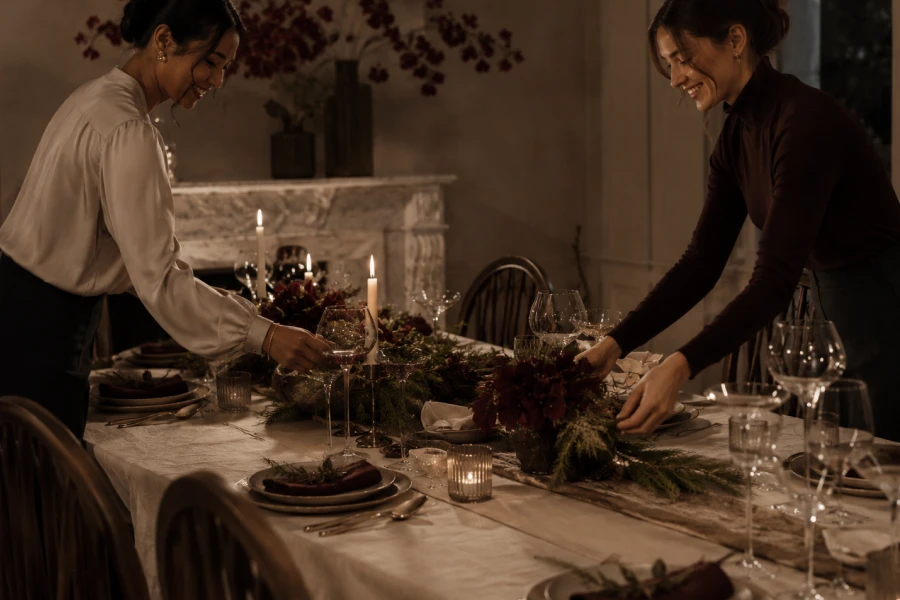
Winter tablescape ideas can transform a meal before the first plate is served. A thoughtfully styled table signals care, welcome, and a willingness to slow down together. It does not need to look formal or overly decorated. The strongest tables feel beautiful because they are easy to gather around. They leave room for food, conversation, and real movement. Winter offers a natural opportunity to use warm light, texture, and layered materials. Even simple dinnerware can feel special with the right supporting details. A good table setting should support the meal instead of competing with it. When every element has a reason to be there, the atmosphere feels relaxed and intentional. That balance is what makes guests feel comfortable from the moment they sit down.
Begin by deciding what kind of meal the table needs to support. A holiday dinner may call for more layered place settings and candles. A casual evening with friends may need something simpler and easier to clear. The mood should match the gathering rather than follow a fixed formula. Consider the food, number of guests, and length of the meal. A crowded menu needs more open surface space. A long dinner benefits from low lighting and comfortable visual rhythm. The table should make people feel at ease, not overly cautious. Start with function before choosing decorative details. That approach helps you style a table that works beautifully in real life.
Textiles are one of the easiest ways to make a winter table feel warm. A runner, tablecloth, placemat, or napkin can introduce softness immediately. Choose materials that feel rich but practical, such as linen, cotton, wool blends, or textured paper. The foundation does not need to be heavily patterned. A solid color with a tactile finish can create plenty of interest. Layer different materials without making the surface feel busy. A linen runner and woven placemat can work beautifully together. Tablescape styling inspiration can help you find combinations that feel seasonal without relying on obvious motifs. Keep the base simple enough for food and serving pieces to stand out. Texture should create warmth, not visual confusion.
Candles are one of the most effective ways to create a warm winter table. Their light makes glassware, ceramics, and food look more inviting. Choose holders that fit the scale of the table and leave room for conversation. Low votives work well when the surface is already busy. Taper candles can add height when they do not block sightlines. Keep flames away from loose textiles and crowded serving areas. Use unscented candles when food is the focus. A mixture of heights can create depth without feeling formal. The aim is a soft glow that makes guests want to settle in. Candlelight should support the meal, not become the main event.
A winter table can feel seasonal without relying on a single traditional color scheme. Choose a small palette and repeat it through linens, candles, and natural accents. Cream, deep green, charcoal, berry, wood tones, and warm metal accents all work well. The palette should reflect the room around the table. That connection makes the setting feel integrated instead of separate. Use seasonal color in small doses for a more refined result. A dark napkin, green branch, or burgundy candle can be enough. Let the dinnerware remain simple if the other elements carry more color. Restraint gives the table an effortless quality. It also makes reuse easier across different winter gatherings.
Natural elements bring softness and movement to winter dining tables. Branches, herbs, pine, dried seed heads, citrus, and seasonal fruit can all work beautifully. Choose pieces that stay low and do not overwhelm the center of the table. A simple line of greenery can be more effective than a large arrangement. Consider scent when using natural materials around food. Avoid anything too fragrant or messy. Use small clusters instead of one oversized centerpiece. That approach gives you room to adjust as dishes arrive. calm holiday entertaining ideas can help keep the table beautiful while remaining practical. Nature works best when it feels loosely gathered rather than perfectly arranged. The table should still feel ready for real people and real food.
Comfort is often what guests remember after dinner ends. Add details that make the table easier to enjoy for several hours. Soft napkins, comfortable seating, water within reach, and enough space between place settings all matter. Consider small personal touches, such as a handwritten note or favorite after-dinner treat. These gestures do not need to be elaborate. They simply show that you considered the guest experience. A table becomes memorable when people feel relaxed enough to stay. For a practical structure, winter sanctuary refresh ideas can help you connect dining details with the larger atmosphere of the home. Focus on how the table feels, not just how it photographs. Warmth comes from hospitality as much as design. That is what gives a winter meal its staying power.



Leave a comment