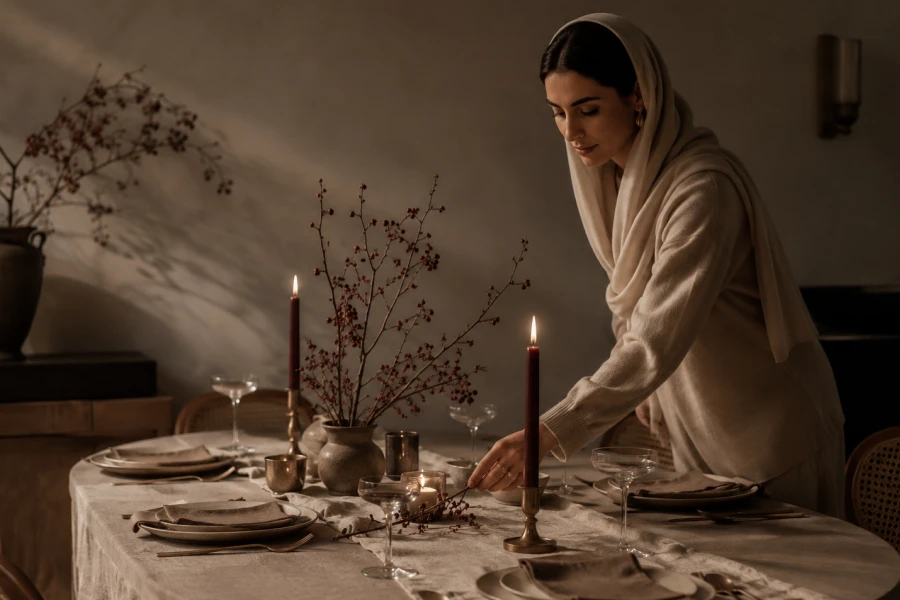
Warm minimalist table decor offers a calmer approach to winter hosting and everyday meals. It proves that a seasonal table does not need many objects to feel special. The style relies on careful choices, natural texture, and enough empty space for the setting to breathe. Instead of adding more, you focus on what creates the greatest visual and emotional impact. A few materials can establish warmth more effectively than a crowded centerpiece. The result feels polished without becoming formal. It also makes the table easier to use during real meals. This approach works especially well in homes where calm, functionality, and comfort matter equally. When minimalism feels warm rather than sparse, the table becomes more inviting. That balance allows the season to show through without overwhelming the room.
Begin by removing anything that does not support the meal or atmosphere. Clear the surface so you can see the table’s shape, material, and natural character. Then add back only the elements that genuinely improve the setting. A runner, a pair of candleholders, and a small natural accent may be enough. Editing creates space for the details to feel more intentional. It also makes serving food and passing dishes much easier. Ask whether each object adds comfort, function, or visual balance. If it does not, leave it out. Minimalism is not about deprivation. It is about making every choice feel purposeful.
Warmth in minimal table styling often comes from material rather than color. Linen, wood, ceramic, aged metal, and textured glass can create depth without visual excess. Choose a few surfaces that look good together and let them repeat. A pale linen runner can soften a wooden table. Matte ceramic plates can feel grounded beside slender glassware. A small brass detail can introduce warmth without making the setting look flashy. Materials should feel tactile and slightly imperfect rather than overly polished. Warm minimalism approach ideas can help you combine these elements without losing simplicity. The goal is a table that feels inviting from close up as well as across the room. Texture gives minimal spaces emotional depth.
A limited palette makes a winter table feel calm and cohesive. Start with the colors already present in the dining room. Then choose one deeper accent and one softer neutral to support them. Cream, taupe, charcoal, brown, olive, muted red, and smoky blue can all work beautifully. Keep the contrast gentle so the table feels restful. A single dark napkin or candle may provide enough seasonal depth. Let the tabletop, plates, or linens carry most of the visual field. Avoid introducing too many competing shades at once. Repetition creates polish without requiring matching sets. A restrained palette also makes the styling easy to adapt for different gatherings.
A minimal centerpiece should create presence without blocking conversation. Choose one low arrangement, candle cluster, bowl, or branch detail. The object should feel connected to the season but flexible enough for everyday use. A simple ceramic vessel with winter greenery can be enough. A shallow bowl of citrus, walnuts, or pinecones can add natural texture. Keep the scale modest so there is room for serving dishes. Consider how the centerpiece looks from every seat around the table. It should create interest without demanding attention. Low arrangements also make the room feel more open. That openness is an important part of warm minimal styling.
The most successful seasonal tables do not wait for a special occasion. They make ordinary meals feel more considered without requiring extra work. Keep a few versatile pieces within easy reach. A runner, candleholders, cloth napkins, and small vessel can be used repeatedly in different ways. This makes the table easier to refresh for weekday dinners. It also lets you create a welcoming look quickly when guests arrive. winter dining table plan ideas can help you choose pieces that work across casual and celebratory settings. Practical repetition makes styling feel sustainable. You do not need a different setup for every meal. A reliable foundation can still feel special when the light and mood change.
Minimal styling becomes warmer when it includes something personal. That could be a handmade ceramic piece, a family textile, a favorite serving bowl, or a branch gathered from outside. Personal objects keep the table from feeling anonymous. They also create small conversation points without adding clutter. Choose one or two meaningful details and let them stand out. Avoid using sentimental pieces simply because you own them. The item should still support the feeling of the table. For a final layer, inviting gathering details can help you make simplicity feel generous rather than bare. Warm minimalism works when guests can sense care in the choices. The table feels calm, useful, and quietly personal. That is enough to make an everyday meal feel like anoccasion.


Leave a comment